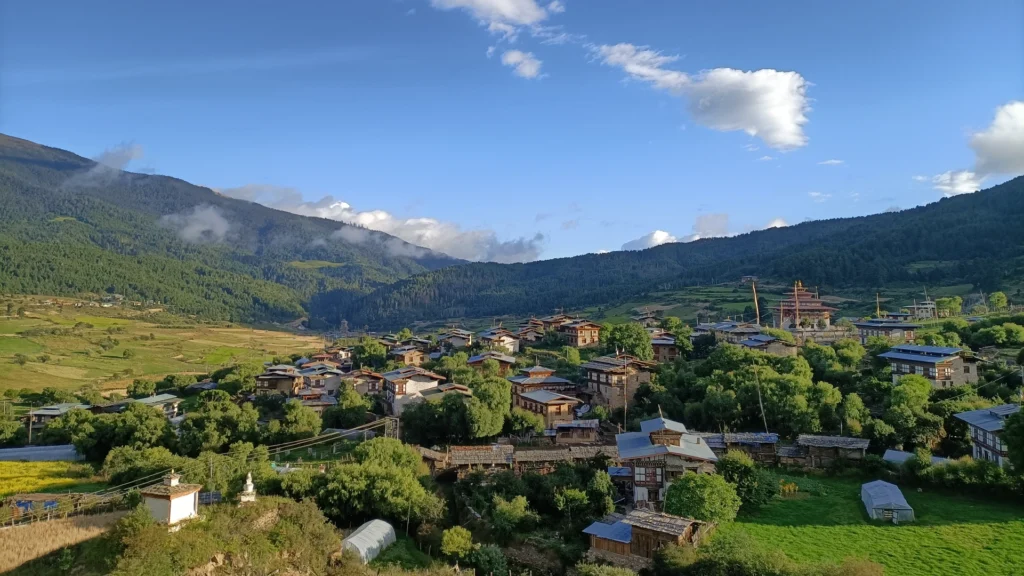
Situated in central Bhutan, Bumthang is considered the country’s spiritual heartland. With sacred Nyes (pilgrimage sites) and some of Bhutan’s oldest temples, visitors experience a profound sense of spirituality and reverence. Often called the Switzerland of the East, its scenery bears a striking resemblance to the Swiss countryside, while the region’s long association with Switzerland can be traced back to the Swiss nationals who worked on the Dairy and Forestry Project in the 1970s. The historic Swiss Guest House grew out of this connection and remains one of Bumthang’s oldest guesthouses.
Bumthang has four main valleys: Ura, Chumey, Tang, and Choekhor. Choekhor, home to Jakar town and the Dzongkhag’s main urban centre, is an ideal base for exploring the region. With hotels and quiet cafés, Jakar offers a relaxed place to unwind after a day of exploring. Buckwheat is an important local crop, with buckwheat noodles and pancakes among the region’s local specialities.
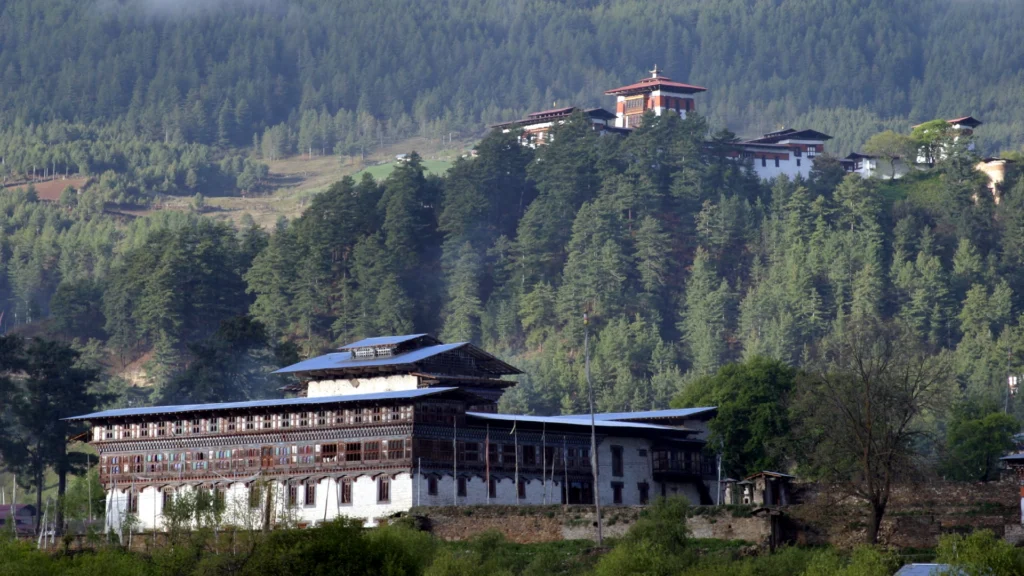
Places of interest in Bumthang include Jakar Dzong, a 16th-century fortress overlooking the township of Jakar. Jambay Lhakhang, built around 659 CE, is one of the oldest temples in Bhutan and is well worth a visit. The mysterious Burning Lake (Mebar Tsho), with its legendary stories of saints and miracles, is also located in the region. Sacred sites associated with Guru Rinpoche, such as Kurjey Lhakhang, attract Buddhist pilgrims from all over Bhutan.
The Owl Trek is one of the major hikes in the region. This three-day trek takes you through rich forests of blue pine, fir and bamboo, home to numerous species of birds and other wildlife. The trek also offers spectacular views of the surrounding mountains, including Gangkar Puensum, the world’s highest unclimbed mountain.